Crawbl Internal Documentation
Private developer documentation for the Crawbl team. For platform overview, core concepts, and strategy, see the public docs.
Learn the platform shape first
Crawbl has one public API, one orchestrator, and one isolated runtime per user. If you understand that shape first, the rest of the docs stop feeling random.
The 60-second tour is the front door to this library. It gives you the mental model first, then hands you off to the right starting pages.
Use this only when you need to work on the codebase directly. These pages are for laptop setup, local backend work, and the first real cluster deploy.
Dev Environment
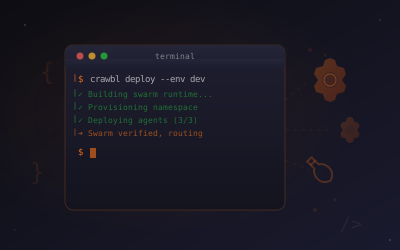
Connect to the shared environment, get the main URLs, and verify your access before debugging or testing anything.

Run Locally
Start the backend, hit the health endpoint, and run the local stack before touching shared infrastructure.

Tools & Dependencies
Install the pinned tools, configure credentials, and make sure your shell can talk to the cluster and supporting services.
Understand the codebase structure, layered architecture patterns, and internal contracts before writing code.
Codebase Layout
Navigate the repository structure — where handlers, services, repos, and infrastructure code live.
Layered Design
The handler → service → repo layering rules, type conventions, and error handling patterns.
Webhook Contract
The internal wire protocol between the orchestrator and ZeroClaw agent runtimes.
Build Features
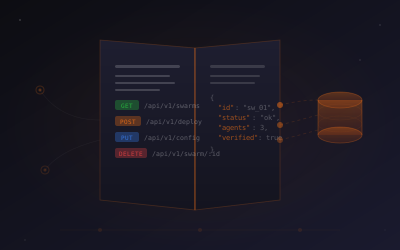
Add endpoints, write migrations, and follow the code patterns the backend already uses
Ship Changes
Learn what CI deploys automatically, when to build images yourself, and how to verify the result
Fix Problems Fast
Use the runbooks for crash loops, secret sync issues, auth failures, image pulls, and cleanup problems
Internal security implementation details — HMAC auth filter mechanics, secret storage paths, and validation flows.
HMAC Auth Filter
The WASM edge filter that validates mobile device signatures and MCP bearer tokens.
Secrets Management
AWS Secrets Manager paths, External Secrets Operator sync, and the bootstrap flow.
Use reference pages when you already know what you are looking for and just need the exact command, path, endpoint, or config value.
If you do not already know what a term means, start in the Platform Overview or Core Concepts first. Reference pages optimize for exactness, not teaching from zero.
API Reference
Routes, auth rules, payload shapes, and realtime events
Database
How the schema is organized, what tables exist, and how migrations are applied
CLI & Commands
crawbl commands, common kubectl checks, and the shortcuts people use every day
Infrastructure
Pulumi, ArgoCD, namespaces, ingress, secrets, and runtime isolation